Table of Contents
Introduction to Digital Cameras Under $100
The evolution of digital cameras has transformed the landscape of photography, making it more accessible to enthusiasts and professionals alike. Originally, photography relied heavily on film, which posed limitations in terms of cost, development time, and the number of exposures available. With the advent of digital technology, photographers have been afforded unprecedented flexibility and convenience. Digital cameras allow users to take numerous photographs without the need for physical film, an advancement that has significantly altered how people document their lives and experiences.
Today, the market offers a wide array of digital cameras, ranging from DSLRs and mirrorless models to compact point-and-shoot devices. Each category varies considerably in terms of features, size, and image quality, catering to diverse preferences and photography styles. For instance, DSLRs and mirrorless cameras are favored by serious photographers for their interchangeable lenses and extensive manual settings. Meanwhile, compact cameras are appreciated for their portability, making them ideal for casual usage and travel.

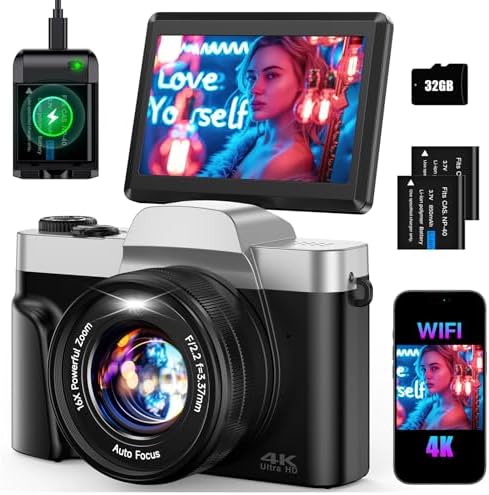
5k digital camera
5K Digital Camera for Photography with 6X Optical Zoom, 64MP Autofocus WiFi Vlogging Camera for YouTube with Dual Lens, Compact Point and Shoot Digital Cameras with Touch Screen, 32GB Card,2 Batteries
Budget-conscious consumers often seek out affordable options, particularly under the $100 mark, which offers a plethora of benefits for beginners, travelers, and casual photographers. In this price range, one can find reliable cameras that equip users with essential features such as automatic modes, decent image quality, and valuable portability. These entry-level models encourage experimentation without the daunting fear of damaging a premium device. Furthermore, they serve as an excellent introduction to the world of photography, providing users with the opportunity to learn fundamentals and develop their skills without significant financial investment.
Why Choose a Camera Under $100?
Choosing a digital camera priced under $100 can offer numerous advantages, particularly for those entering the world of photography. One of the primary benefits is affordability. For individuals, whether they are students or casual users, a budget camera allows access to basic photographic features without a significant financial investment. This makes it an excellent choice for those who may not be ready to commit to a more expensive model.
Accessibility is another key factor that underlines the appeal of budget-friendly cameras. With their lower price point, these cameras are readily available to a broader audience, including hobbyists who want to experiment with photography without the burden of high costs. Many entry-level models have intuitive interfaces, enabling users to focus on learning the basics of capturing images rather than navigating complex settings.
Moreover, digital cameras under $100 can serve as a reliable second camera for those who may already own a professional model. Travelers, for instance, may prefer to take a lightweight, inexpensive camera on outdoor adventures, where the risk of damage or loss is higher. This ensures that they do not compromise their more expensive equipment while still capturing memorable moments.
Another target audience for budget models includes families who wish to document everyday life. These cameras are often user-friendly and can withstand the rigors of active family events. As a result, parents can engage in creative activities with their children without the hesitation that might come with using more delicate, expensive cameras.
In essence, opting for a digital camera under $100 not only meets the needs of diverse users but also opens up opportunities for exploration and creativity in photography.
Key Features to Consider
When selecting a budget digital camera, it is essential to consider several key features that can significantly influence your photography experience. Among the most important factors is image quality. This is often determined by the camera’s sensor size and technology. A camera with a larger sensor can capture more light and detail, resulting in clearer, sharper images, especially in low-light conditions.
Another crucial feature is the resolution, typically measured in megapixels. While higher resolution allows for larger prints and more detailed images, it is not the sole determinant of image quality. For budget cameras, a resolution of 12 to 20 megapixels is generally sufficient for casual use. However, it is essential to balance resolution with other features to ensure overall performance.
Zoom capabilities also play a vital role in the versatility of a digital camera. Different types of zooms—optical and digital—can significantly alter your shooting experience. Optical zoom offers better quality as it uses the camera’s lens to magnify the subject, while digital zoom simply crops the image, which can diminish quality. For those interested in wildlife or outdoor photography, a camera with a good optical zoom is highly recommended.
Battery life is another important aspect to look for. A camera that can last through a day of shooting without frequent recharging will provide a better experience, especially on trips or during events. Lastly, ease of use should not be overlooked. Intuitive controls and a straightforward interface allow for a more enjoyable shooting experience, particularly for beginners. A camera that is simple to operate will help you focus on capturing great images rather than struggling with complex settings.
Top Budget Digital Cameras in 2023
In 2023, numerous digital cameras are available for under $100, making them accessible to photography enthusiasts on a budget. Below is a curated selection of the best budget digital cameras that combine performance and affordability.
Cannon PowerShot ELPH 180
The Cannon PowerShot ELPH 180 features a 20-megapixel sensor and a 8x optical zoom lens, providing users with impressive photo quality. Weighing only 110 grams, this compact camera is highly portable. Pros include its ease of use and inclusion of image stabilization, while a downside could be its limited manual control options.


Nikon COOLPIX A10
The Nikon COOLPIX A10 offers a 16.1-megapixel resolution and 5x optical zoom, functioning well in diverse lighting conditions. Its simple interface allows beginners to take clear photos easily. The advantages of this model are its user-friendly controls and decent battery life, but it lacks Wi-Fi connectivity, which might be a hindrance for some users.


Sony DSC-W800
The Sony DSC-W800 showcases a 20.1-megapixel sensor paired with a 5x optical zoom lens, ensuring excellent image clarity. It features a “SteadyShot” image stabilization, which is beneficial for reducing blur in images. The camera is lightweight and offers 720p HD video recording. However, its small screen size may not appeal to all users.
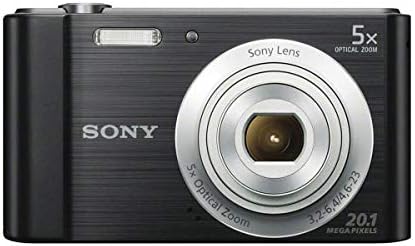
- Lens Type: Wide Angle
- Super HAD CCD 20.1 MP sensor
- Sony Lens with F3.2 (W) – 6.4 (T) Maximum Aperture
Fujifilm Instax Mini 9
For those who appreciate instant photography, the Fujifilm Instax Mini 9 provides a fun solution with its unique instant print feature. Although primarily a snapshot camera with a fixed focus and a small lens opening, it excels in capturing spontaneous moments. Its charm lies in the ability to print photos instantly, though the ongoing cost of film might be a con for budget-conscious individuals.

- New Selfie Mirror, Picture size: 2.4 X 1.8 Inches
- New Macro Lens adapter for close-ups – 35cm to 50cm
- Automatic exposure measurement. The camera signals the recommended aperture setting with a flashing LED. This helps capt…
Each of these cameras offers its strengths and weaknesses, allowing consumers to choose based on their specific photography needs while adhering to a budget. When considering options, it is essential to weigh these features to find a model that best suits individual preferences and requirements.
User Reviews and Testimonials
The increasing popularity of budget-friendly digital cameras has led to a diverse array of opinions from users who have made these purchases. Many individuals have expressed satisfaction with the overall value provided by these cameras, particularly in terms of their portability and ease of use. Users often highlight how these digital cameras come equipped with user-friendly interfaces, ensuring that even beginners can capture great photographs without extensive photographic knowledge.
One of the most commonly reported strengths of digital cameras under $100 is their compact size, which makes them ideal for casual photography on the go. Many users appreciated being able to slip these lightweight devices into their bags without adding excess bulk. This feature is particularly advantageous for travelers or families looking to document everyday moments without the hassle of lugging around heavy equipment.
However, while many users praise the affordability and usability of these cameras, there are also noted limitations. A recurring theme in user testimonials is the compromise in image quality compared to higher-end models. Several users reported that while these cameras perform well in well-lit conditions, they struggle to capture clear images in low-light scenarios. Additionally, some users have expressed dissatisfaction with the durability of budget models, with a few stating that the build quality does not withstand rigorous use.
Overall, user reviews reflect a mixed experience with digital cameras priced under $100. Buyers should consider their specific needs, such as whether they prioritize convenience and cost over professional image quality. By analyzing these insights, potential customers can make informed decisions that suit their photography desires and requirements. The blend of pros and cons outlined by users ultimately aids in setting realistic expectations for these accessible digital cameras.
Comparative Analysis with Higher-Priced Models
When considering the best digital cameras under $100, it is essential to evaluate how these budget-friendly options measure up against their higher-priced counterparts. In the realm of photography, the phrase “you get what you pay for” often holds true, suggesting that more expensive models typically come equipped with advanced features and superior technology. However, this does not mean that affordable cameras are incapable of delivering satisfactory results for casual users or beginners.
One of the primary differences between cameras in the sub-$100 category and higher-priced models is the quality of image sensors. Budget cameras often feature smaller sensors, which may result in lower image resolution and less effective low-light performance. As a consequence, those who prioritize high-quality prints or professional-grade shots may find these entry-level options lacking. Conversely, for everyday snapshots and social media sharing, the image quality from inexpensive cameras can still be quite acceptable.
Another crucial aspect to consider is the lens options available. Higher-end models frequently offer interchangeable lenses, providing users the flexibility to explore various styles of photography, from wide-angle landscapes to macro shots. In contrast, many budget cameras come with fixed lenses that may limit creativity and overall versatility. However, these fixed lenses are often optimized for standard shooting scenarios and can still deliver pleasing results for general use.
In terms of additional features, premium cameras often include advanced autofocus systems, higher burst rates for action shots, and enhanced connectivity options, such as Wi-Fi or Bluetooth. Budget cameras, while typically lacking these high-tech attributes, still may incorporate basic connectivity features and user-friendly interfaces, making them accessible to beginners. Ultimately, the choice between budget and higher-priced models depends on the user’s intended use and level of expertise, as each group of cameras serves distinct purposes in the photography landscape.
Tips for Maximizing Your Budget Camera Experience
Utilizing a budget digital camera does not mean compromising on the quality of your photography. With the right techniques, you can significantly enhance your photographs. Here are some practical tips to maximize your camera experience while being mindful of your budget.
First and foremost, pay attention to lighting. Natural light is your best friend when it comes to photography. Whenever possible, shoot during the golden hours, which are shortly after sunrise and before sunset. The soft light during these times adds a warm glow to your images, enhancing their overall appeal. If you need to photograph indoors, position your subject near windows or utilize artificial lighting effectively to avoid shadows.
Composition is another crucial factor in photography. Familiarize yourself with the rule of thirds, which involves dividing your frame into three equal horizontal and vertical sections. Position your subject along these lines or at their intersections for a well-balanced photo. Additionally, experiment with different angles and perspectives. Slightly altering your viewpoint can dramatically change the impact of your photographs.
Basic photo editing techniques can also yield significant improvements in your final images. Use editing software, such as Adobe Lightroom or free alternatives, to adjust brightness, contrast, and color saturation. Simple edits can elevate the quality of your photographs, making them more visually appealing without requiring professional-level equipment.
Finally, practice makes perfect. Regularly using your budget digital camera will help you understand its functionalities better and develop your photography skills. Experiment by taking photos in various settings and conditions to discover what works best for you. With patience and creativity, you can achieve stunning results with even the most affordable gear.
Maintenance and Care for Your Digital Camera
Proper maintenance and care for your digital camera are crucial for ensuring its longevity and optimal performance, especially when investing in a budget model. These simple yet effective practices can help protect your device from damage and keep it functioning well over time.
First and foremost, regular cleaning is vital. Use a soft, lint-free cloth to gently wipe the exterior of the camera, removing dust and fingerprints. For the lens, a blower can help dislodge particles, while a lens brush can effectively remove debris without scratching the glass. Applying a lens cleaning solution with a microfiber cloth can help maintain the clarity of your shots.<\/p>
Storage plays a significant role in maintaining your digital camera. When not in use, always keep the camera in a protective case. This prevents physical damage and shields it from dust and moisture. Additionally, store your camera in a cool, dry place away from direct sunlight, as excessive heat can damage its internal components. If you often use your camera outdoors, consider using silica gel packets in your storage bag to absorb moisture.
To protect the camera from potential hazards, avoid exposing it to extreme conditions, such as heavy rain or sudden drops. If your camera is not water-resistant, use a weatherproof case or cover it during inclement weather. Additionally, when handling the camera, ensure your hands are clean and dry to prevent oils and dirt from transferring to the casing and lens.
Lastly, regularly check the battery and memory card. Remove the battery if the camera will not be used for an extended period to prevent leakage and corrosion. Also, ensure that your memory card is formatted correctly and has enough space to capture your moments. By following these maintenance practices, you can help ensure your budget-friendly digital camera remains in excellent working order, maximizing your photography experience.
Conclusion: Making the Right Choice
In reviewing the best digital cameras under $100, it is essential to recognize that an affordable price tag does not necessarily equate to compromised quality. These budget models provide a valuable opportunity for photography enthusiasts, beginners, and casual users to venture into the world of digital photography without significant financial investment. The variety of options available ensures that there is something for everyone’s needs, whether you seek basic functionality or a few advanced features.
When choosing from the diverse selections of digital cameras within this price range, it is crucial to assess your individual requirements. Consider factors that matter most to you such as image quality, ease of use, battery life, portability, and additional functionalities like Wi-Fi connectivity or video recording capabilities. Matching your specific needs with the right camera can enhance your photography experience and ensure satisfaction with your purchase.
Remember that even within the budget segment, there are plenty of high-quality digital cameras that can deliver satisfactory performance. Each model covered in this guide has been selected based on its overall functionality and user ratings. Reading customer reviews and exploring features in detail can also aid in making an informed decision.
As you move forward, the best approach is to weigh the available options against your personal preferences and intended usage. This thoughtful process will not only lead to a more satisfying purchase but also ensure that your foray into photography is rewarding and enjoyable. Ultimately, selecting the right digital camera under $100 is about finding a balance between affordability and functionality that aligns with your expectations and photography goals.
This post contain affiliate link , as an Amazon Associate I might earn commission from qualifying purchases